Thinking about a move to Fuquay-Varina and wondering what everyday life will cost? You’re not alone. Between housing, utilities, commuting into Raleigh, and family expenses, it helps to see the big picture before you pack a box. In this guide, you’ll learn how Fuquay-Varina fits into the Triangle, what typical monthly costs look like, and how to build a budget that matches your lifestyle. Let’s dive in.
Fuquay-Varina at a glance
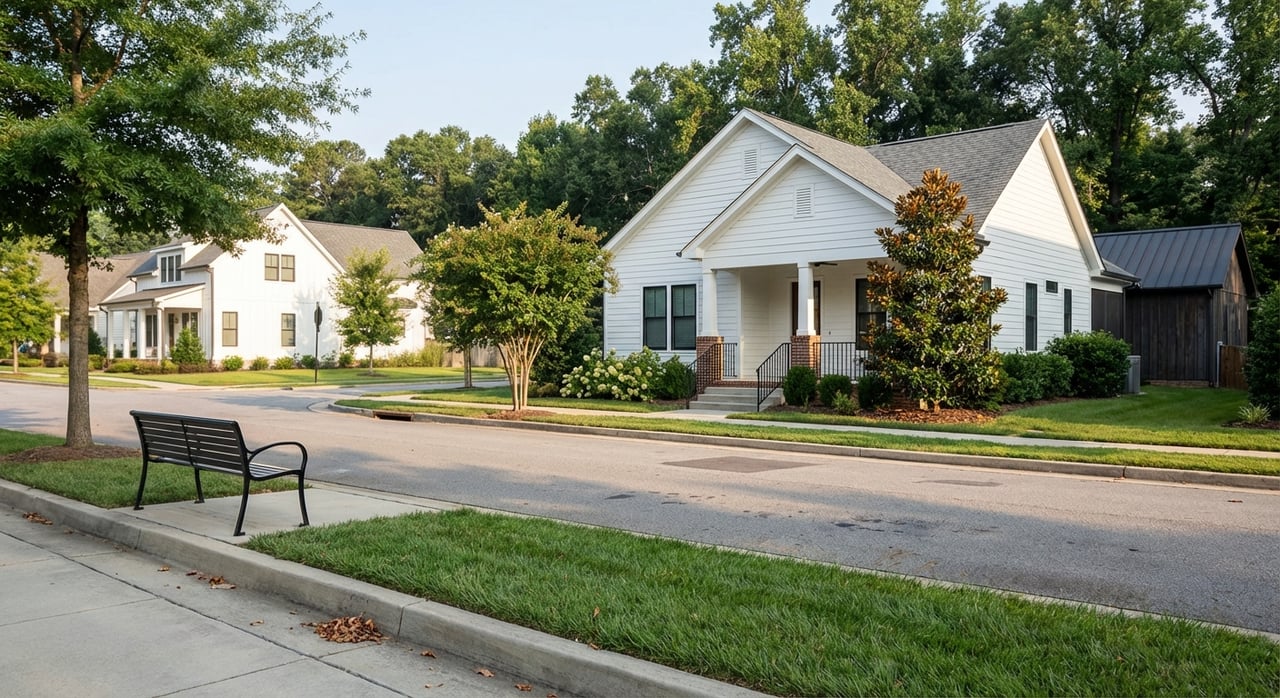
Fuquay-Varina sits in southern Wake County and is a popular choice for Triangle commuters who want larger yards, newer subdivisions, and prices that can be easier on the budget than some closer-in Raleigh neighborhoods. Proximity to Raleigh and Research Triangle Park makes commute time a key factor, especially during peak hours. For many families, local amenities like parks, programs, and schools help justify housing costs and shape neighborhood choices.
Recent trends across the region include the shift toward suburban living, pauses or cooling in sales when mortgage rates rise, and ongoing population growth in Wake County. These larger forces affect inventory, prices, and how fast good homes get snapped up.
Housing costs: buy vs. rent
Your largest monthly expense will likely be housing. Here’s how to think about it in Fuquay-Varina.
Buying: what to include
If you plan to buy, budget for:
- Mortgage principal and interest
- Property taxes
- Homeowners insurance
- Private mortgage insurance if your down payment is under 20 percent
- HOA dues if your neighborhood has shared amenities
- Maintenance and repairs
- Utilities
- Closing and moving costs
For planning, a common rule is to set aside about 1 percent of the home’s value per year for maintenance. HOA dues in newer subdivisions can range from about $50 to $400 per month depending on amenities. Utilities vary by home size and season.
How to estimate your mortgage payment:
- Loan amount = purchase price minus down payment
- Monthly P&I uses the standard fixed-rate formula: Payment = L x [r(1+r)^n] / [(1+r)^n − 1], where L is loan amount, r is monthly interest rate, and n is total number of payments
- Add taxes, insurance, HOA, and a maintenance reserve to get your full monthly housing cost
Illustrative example for a typical 3-bed home purchase:
- Mortgage P&I on a $425,000 purchase with 20 percent down (loan about $340,000): approximately $2,050 per month, depending on the rate
- Property taxes: about $250 per month (confirm current Wake County rate and multiply by your assessed value)
- Homeowners insurance: about $100 per month
- HOA: about $75 per month
- Utilities: about $300 per month
- Maintenance reserve: about $350 per month
These figures are examples, not quotes. Always update with your exact price, rate, and HOA.
Renting: what to include
If you plan to rent, budget for:
- Monthly rent
- Renter’s insurance, often $10 to $25 per month
- Utilities not included in your lease
- Parking or garage fees if applicable
- Security deposit and one-time move-in fees
Illustrative rent points from local context:
- A 2-bed apartment example: $1,700 per month
- A 3-bed single-family rental example: $2,300 per month
Your exact rent will depend on location, community amenities, and lease term. Use a range and check current listings as rates can shift seasonally.
Utilities and monthly services
Utility costs in Fuquay-Varina depend on home size, energy use, and season.
- Electricity: Many households in the Raleigh area see about $100 to $200 per month, with summer AC driving the higher end
- Natural gas: Monthly bills vary by usage, often higher in winter when used for heating
- Water and sewer: Town charges vary with family size and irrigation, often about $40 to $150 per month
- Trash and recycling: Often about $15 to $40 per month depending on service
- Internet: Typical home broadband plans run about $50 to $100 per month, more for gigabit
Consider TV or streaming as discretionary. If you irrigate your lawn or fill a pool, plan for higher seasonal water use.
Commuting and transportation
Drive times and routes
Fuquay-Varina to downtown Raleigh is generally a 15 to 25 mile drive depending on your start and end points. In peak traffic, typical drive times range about 25 to 50 minutes. Common routes include US-401, NC-55, and I-40 depending on your destination. Hybrid work schedules can ease congestion costs and time.
How to budget your commute
Estimate your monthly fuel like this:
- Roundtrip miles per day x workdays per month ÷ your vehicle MPG x local price per gallon
Example: 20 miles each way x 22 workdays = 880 miles per month. At 25 MPG and $3.50 per gallon, fuel is about (880 ÷ 25) x 3.50 = 35.2 x 3.50 ≈ $123 per month.
Add:
- Maintenance and tires: plan $50 to $125 per month on average
- Car insurance: depends on your vehicle and driving history
- Parking fees: add if your employer does not cover parking
Alternatives to driving alone
Direct high-frequency transit from Fuquay-Varina to Raleigh is limited. Some commuters use park-and-ride options, express services, or vanpools. Ridesharing and telework can reduce fuel and parking costs. For short in-town trips, consider biking or an e-bike where routes and safety allow.
Everyday expenses that move the needle
Groceries and dining
Use the USDA Food Plans to estimate a monthly grocery budget based on your household size and eating style. For many families, the USDA moderate plan is a practical starting point. Add a separate line for eating out since restaurants drive big differences between households.
Childcare and education
Childcare is often a major fixed expense. Center-based infant care in Wake County has historically come in above national averages. For school-age kids, add costs for after-school or summer programs as needed. If you are considering private school, include tuition and fees.
Public schools in Wake County operate by attendance zones and program choices. Verify enrollment and program details with the district as boundaries and options can vary by address.
Healthcare, insurance, and taxes
Health insurance costs depend on your employer plan or ACA marketplace choices. Budget for premiums plus out-of-pocket costs. North Carolina uses a flat state income tax structure. Sales taxes include state and local portions in Wake County. Confirm current rates when you build your annual plan.
Other recurring costs
Plan for HOA dues if applicable, yard care or landscaping, seasonal energy swings, pet care, gym memberships, entertainment, and savings.
Sample monthly budgets
These snapshots are illustrative examples to help you see how costs stack up. Replace each line with your own quotes and current rates.
Single commuter, renting a 2-bed
- Rent: $1,700
- Renter’s insurance: $15
- Utilities: $150
- Internet and phone: $120
- Transportation: $500
- Groceries: $350
- Health insurance out-of-pocket: $200
- Entertainment and subscriptions: $150
Estimated total: about $3,185 per month
Dual-income family, buying a 3-bed home
- Mortgage P&I on a $425,000 purchase with 20 percent down: about $2,050
- Property taxes: about $250
- Homeowners insurance: about $100
- HOA: about $75
- Utilities: about $300
- Internet and streaming: about $120
- Groceries: about $900
- Childcare or before-and-after care: $800 to $1,200
- Two vehicles, fuel and insurance: about $900
- Maintenance reserve: about $350
Estimated total: about $6,000 to $6,700 per month depending on childcare and commute
Family renting a 3-bed single-family home
- Rent: $2,300
- Renter’s insurance: $20
- Utilities: $300
- Internet: $120
- Transportation: $700
- Groceries: $900
- Childcare: $800
- Miscellaneous and savings: $300
Estimated total: about $5,440 per month
Tradeoffs to consider in Fuquay-Varina
- Closer to major corridors like NC-55 or I-40 can shorten your commute but may raise housing prices or HOA dues
- Larger lots and newer homes often mean higher utility and maintenance costs, especially for heating, cooling, and lawn care
- A longer commute can save on housing, but fuel, maintenance, and parking can offset those savings
Build your personalized budget
Follow these steps and plug in your numbers:
- Housing
- If buying: P&I from your lender quote + monthly property tax + homeowners insurance + HOA + maintenance reserve
- If renting: monthly rent + renter’s insurance + utilities not covered by the lease
- Utilities and connectivity
- Electricity + gas + water and sewer + trash + internet + phone
- Transportation
- Car payments + fuel + insurance + maintenance + parking or transit fares
- Family costs
- Groceries + childcare + healthcare premiums and expected out-of-pocket + education fees or programs
- Miscellaneous and goals
- Savings, retirement, debt payments, subscriptions, entertainment, and seasonal costs
Revisit your plan when rates or life events change. Many households update every 3 to 6 months.
Ready to explore homes and neighborhoods?
If you want local insight on neighborhoods, new construction, and commute tradeoffs, you do not have to figure it out alone. I’ll help you compare monthly costs across homes and communities so you can move with confidence. Connect with Rebekah Edens to start a tailored plan for your budget and timeline.
FAQs
What is a realistic monthly housing budget in Fuquay-Varina?
- Add mortgage P&I or rent plus taxes or renter’s insurance, homeowners insurance, HOA if applicable, utilities, and a maintenance reserve. Use the examples above as a template and replace with your lender quote and current rates.
How long is the commute from Fuquay-Varina to downtown Raleigh?
- Typical peak drive times are about 25 to 50 minutes for a 15 to 25 mile trip, depending on route and traffic. Hybrid schedules can noticeably reduce time and fuel costs.
Are there park-and-ride or express transit options for commuters?
- Direct high-frequency service is limited, but some commuters use park-and-ride, vanpools, or express options where available. Consider telework days to cut costs and time.
What do utilities usually cost for a 3-bed home?
- Many households plan roughly $100 to $200 for electricity, add gas if used for heating, $40 to $150 for water and sewer, $15 to $40 for trash, and $50 to $100 for internet. Seasonal use can raise summer and winter totals.
How much should I budget for childcare in Wake County?
- Costs vary widely by age and program. Center-based infant care has often been above national averages, and school-age care adds fees. Many family budgets include $800 to $1,200 monthly, but confirm with local providers.
How much should I set aside for home maintenance?
- A simple rule is 1 percent of the home’s value per year, divided by 12 for a monthly reserve. Newer homes may see lower early costs, but plan ahead for systems and roof lifecycles.
How does Fuquay-Varina compare with closer-in Raleigh?
- Many buyers find more space and newer homes for the money in Fuquay-Varina, trading a longer commute for lower housing costs. Neighborhoods closer to major corridors can shorten drives but may come with higher prices or dues.