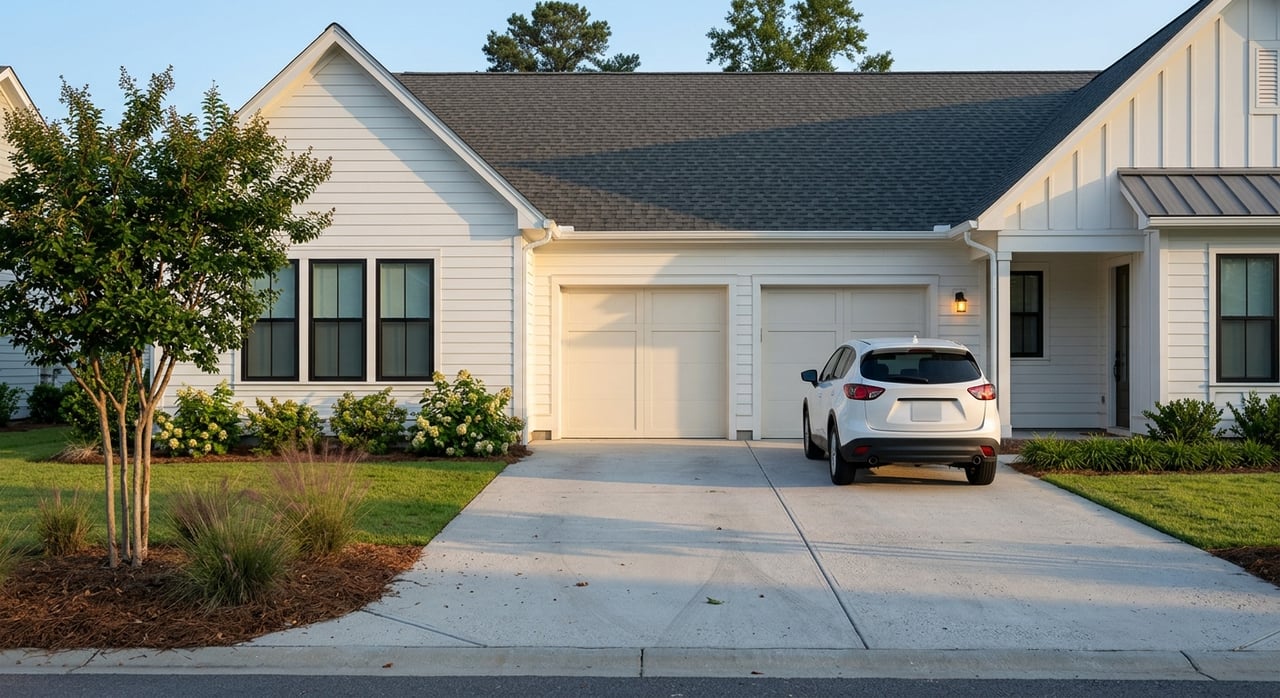
Benson NC Raleigh Commute: What Daily Life Really Feels Like
Rebekah Edens June 18, 2026
Rebekah Edens June 18, 2026
Wondering if you can live in Benson and still make a Raleigh workday feel reasonable? You are not alone. For many buyers, Benson stands out because it offers a small-town setting with direct highway access, but the big question is what that commute actually feels like day to day. This guide breaks down the drive, traffic patterns, transit workarounds, and lifestyle tradeoffs so you can decide if Benson fits the way you really live. Let’s dive in.
Benson sits in southwest Johnston County at the crossroads of I-40 and I-95. The town highlights its easy access to the Research Triangle metro area, which helps explain why it stays on the radar for buyers who work in or around Raleigh.
That location creates a practical middle ground for people who want a smaller-town home base but still need to reach larger job centers. If you are weighing yard space, a quieter setting, or more attainable housing against time on the road, Benson often enters the conversation early.
Johnston County has been growing fast. The Census Bureau estimates the county had 249,794 residents in 2024, up 15.6% from the 2020 base, which reflects the ongoing pull of this part of the region.
On paper, the Benson-to-Raleigh commute looks pretty manageable. Third-party routing estimates place the trip at about 31 miles and roughly 32 minutes in light traffic.
That estimate lines up closely with Johnston County’s mean travel time to work, which is 32.2 minutes. As a baseline, that suggests the commute is realistic for many drivers, especially if your work hours are flexible or you are not heading into the busiest part of the morning rush.
Still, your actual experience will depend heavily on when you leave and where in Raleigh you need to be. A commute to the edge of the city can feel very different from a trip into downtown or farther toward RTP.
The biggest factor is not distance. It is predictability.
According to NCDOT, the I-40 corridor from Raleigh to Clayton serves both Wake and Johnston counties, connects the region to I-95, and functions as a major route to coastal destinations. That stretch saw 35.6 million vehicles in 2015, with congestion and frequent delays during morning and afternoon rush hours.
NCDOT also projects traffic on that corridor to rise 65% by 2040. Widening work is underway for that reason, which tells you a lot about both current demand and expected future pressure.
For your daily life, this means the Benson commute can feel straightforward on a good day and much less predictable during peak periods. If you need to clock in at the same time every morning, or if you have little margin for delays, that variability matters as much as the mileage.
For many drivers, yes. If you are comfortable with a car-based routine and can tolerate some rush-hour inconsistency, Benson can be a realistic place to live while working in Raleigh.
If you expect a direct, door-to-door transit option from Benson, the answer is different. Right now, that is not the strongest fit for how the area’s transportation network is set up.
The better question is often this: does your schedule give you enough flexibility to work around traffic? If the answer is yes, Benson may feel much more workable than it looks at first glance.
Benson is not currently set up as a fixed-route transit town. JCATS provides human-services transportation and public transportation throughout Johnston County, but QuickRIDE is only offered in Smithfield and Selma, and TransitLink’s Benson page shows 0 routes and 0 stops.
In practical terms, that means most Benson commuters still need a car for the first leg of the trip. You would typically drive toward Wake County or a nearby corridor access point, then connect to transit from there.
GoTriangle operates regional bus and shuttle service, paratransit, ridematching, vanpools, and an emergency ride home program across the Triangle region, including Raleigh, Garner, and RTP. That makes transit possible for some commuters, but usually not as a true one-seat ride from Benson itself.
If you want to reduce drive time stress without relying on full local transit service, park-and-ride and shared commuting options are the most realistic tools.
GoRaleigh’s current park-and-ride locations include Garner Station Boulevard, Triangle Town Center, White Oak Shopping Center, and Poole Road. Garner Station Boulevard is served by routes including 7 South Saunders and 40X Wake Tech Express.
GoTriangle also has a park-and-ride facility at Wake Tech’s Southern Wake Campus for students and community residents using transit to access the campus or downtown Raleigh. Its FRX route runs between Fuquay-Varina and downtown Raleigh during weekday peak hours.
For a Benson resident, the pattern is usually simple: drive part of the way, then board from a Wake County location if that works for your schedule. It is not a direct hometown transit system, but it can be a useful hybrid option.
If you are seriously considering Benson, it helps to think less about the perfect commute and more about the manageable commute. A few strategies can make a noticeable difference:
GoTriangle also offers ridematching, vanpools, employer services, hybrid work solutions, and emergency ride home support. For some households, those options can turn an occasional stressful drive into a more sustainable routine.
The appeal of Benson is easy to understand. You get a small-town setting with highway access to the Triangle, which can be especially attractive if you want more breathing room at home.
The tradeoff is time in the car. Even when the route is simple, the routine is still built around driving, and that affects everything from school drop-offs to evening plans to how much flexibility you have after work.
For many buyers, the numbers help explain why the tradeoff can still make sense. In Johnston County, the median owner-occupied home value is $305,600 and the median gross rent is $1,146. For some households, that balance between housing costs and commute time is well worth it.
Benson tends to work well for buyers who are clear-eyed about what they want. If you value space, a smaller-town feel, and regional highway access, the location may line up well with your goals.
It can be especially practical if you work hybrid, have some control over your schedule, or commute to Raleigh, Garner, or nearby job centers rather than relying on a downtown-only routine. The broader commuter network is also built around Raleigh, Garner, and RTP, so those destinations matter when you compare your options.
Benson may be a tougher fit if you want to avoid driving most days or need a highly predictable trip at standard rush-hour times. In that case, a closer-in suburb or a place with stronger direct transit access may feel easier.
Before buying in Benson, it helps to pressure-test the commute the same way you would test the house itself. Think through your full week, not just the best-case drive time.
Ask yourself:
Those answers usually tell you more than a map does. A commute that feels easy for one household can feel draining for another.
If you are comparing Benson with other Raleigh commuter towns, the right choice often comes down to your schedule, your budget, and how much daily driving you are willing to absorb. That is where local guidance can really help. If you want to talk through Benson versus other Johnston, Harnett, or southern Wake options, Rebekah Edens can help you narrow in on the right fit for your routine and your goals.
Let Rebekah Edens guide you through buying, selling or renting a home in North Carolina. View active listings, research past transactions, and schedule showings with me.